Gabriel Oak’s financial ruin and poverty
Far from the Madding CrowdGabriel Oak’s financial ruin and poverty are the consequence of a single catastrophe that destroys the flock on which his independent future depended. Left with little beyond his clothes after settling his debts, he has to seek employment as a shepherd; the reversal costs him his farm but brings into view the steadiness, expertise, and humane regard for animals that shape his subsequent life in Bathsheba Everdene’s service.
The loss of the flock
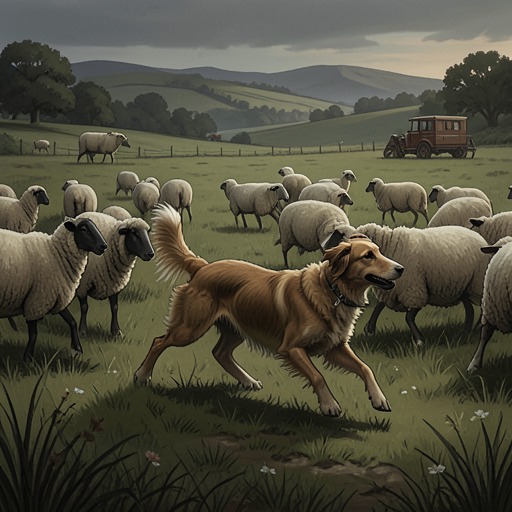
Oak discovers that most of his sheep have vanished after their running bells wake him before dawn. Following their tracks through a break in a hedge and across the hill, he finds his young dog at the rim of a chalk-pit, where broken rails mark the edge. Below lie the dead and dying ewes: two hundred animals, with the unborn lambs representing a further loss. The dog, apparently believing that gathering and driving sheep was the work expected of him, had worried the flock into motion until the animals broke through the rotten railing and plunged over the precipice.
The destruction is both an animal tragedy and an economic collapse. Oak’s first response is pity for the ewes and their unborn lambs; only afterward does he confront the financial consequence. The flock is uninsured, and its loss disperses the savings of a frugal life and brings down his hope of becoming an independent farmer. The young dog is shot later that day, an additional consequence of the same disastrous chain of mistaken, overzealous action.
Debt and the loss of independence
Oak’s farm had been stocked by a dealer who advanced the cost in return for a percentage until the debt was cleared. After the flock is lost, Oak calculates that the stock, plant, and implements that are genuinely his own will be worth just enough to pay what he owes. He emerges free of debt, but with nothing more than the clothes he is wearing. The distinction is stark: he is not left financially obligated, yet he has been stripped of the capital and property that might have made him an independent farmer.
The catastrophe also interrupts a hard-won ascent. Oak’s energies, patience, and industry had brought him to his present position by the time he was twenty-eight, but he feels that the effort has been spent at a blow. In the stunned aftermath, his gratitude that he is not married registers the ruin as a burden he would otherwise have feared imposing on a wife. The thought does not lessen the loss; it reveals how completely he understands poverty as a change in the prospects of anyone who might depend on him.
From farmer to hired shepherd
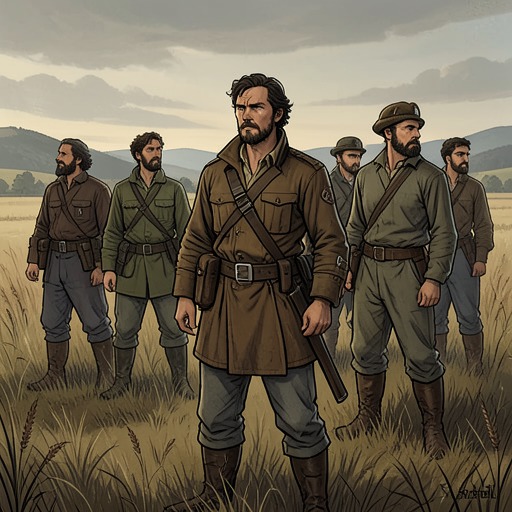
Two months later, at the hiring fair in Casterbridge, Oak is looking for a bailiff’s place. His appearance and manner lead some laborers to mistake him for a farmer, but he has descended from his modest prosperity and now stands among those seeking work. The narrator presents the reversal as an abasement that has also brought a kind of elevation: misfortune has left Oak with a dignified calm and an indifference to fate that he did not previously possess.
When he fails to find a bailiff’s position, he turns to the skill he knows best. He spends most of his remaining money on a shepherd’s crook, exchanges his overcoat for a smock-frock, and returns to the market in the dress of his trade. Yet when farmers learn that his last farm was his own, they become suspicious and withdraw. His experience and former independence, normally marks of competence, make him difficult to place in the labor market. He therefore has to accept whatever chance offers and adapt his procedure to circumstances rather than expect his qualifications to secure him a position.
Skill, service, and the meaning of the reversal
Oak’s poverty does not erase his practical knowledge or humane regard for animals. When Bathsheba’s sheep suffer from dangerous bloat, he responds to her appeal by using a trochar to relieve them. He performs forty-nine successful operations among fifty-seven affected sheep; four have already died, three recover without treatment, and one ewe is fatally injured when he misses his aim. The rescue demonstrates the value of the shepherding expertise that survives his loss of his own flock, while its imperfect outcome keeps the work grounded in urgency and risk rather than presenting skill as infallible.
Afterward, Bathsheba asks him to stay, and Oak agrees. His later place on her farm offers work and responsibility, but it does not restore the independent farm that the catastrophe destroyed. During shearing, he supervises the labor and tends the sheep while Bathsheba watches the workers and the animals; the farm’s seasonal routines make his competence visible in a different economic position. His reversal thus recurs as a contrast between ownership and service: the man who once kept a flock of his own becomes an indispensable shepherd on another person’s land.
Narrative significance
The loss makes the precariousness of rural independence concrete. Oak’s savings, stock, and hopes depend on a flock that can be destroyed in one night, while the immediate cause is neither deliberate malice nor a calculated human decision but a dog’s disastrously consistent effort to do what it has been trained to do. The episode joins the vulnerability of working animals to the vulnerability of the people whose livelihood depends on them: the ewes die, the dog is killed, and Oak loses his economic footing.
Yet the novel does not define Oak only by what poverty takes away. His response begins in compassion, then passes through shock into work. At the hiring fair he converts his remaining means into the tools and clothing of a shepherd; later, the same craft allows him to save much of Bathsheba’s flock. Financial ruin is therefore a decisive reversal, but not the end of his usefulness or agency. It changes the conditions under which his abilities are exercised, turning ownership into hired labor and making patient service the path by which he remains connected to farm life.